


And how to figure out what’s actually going wrong in your job search
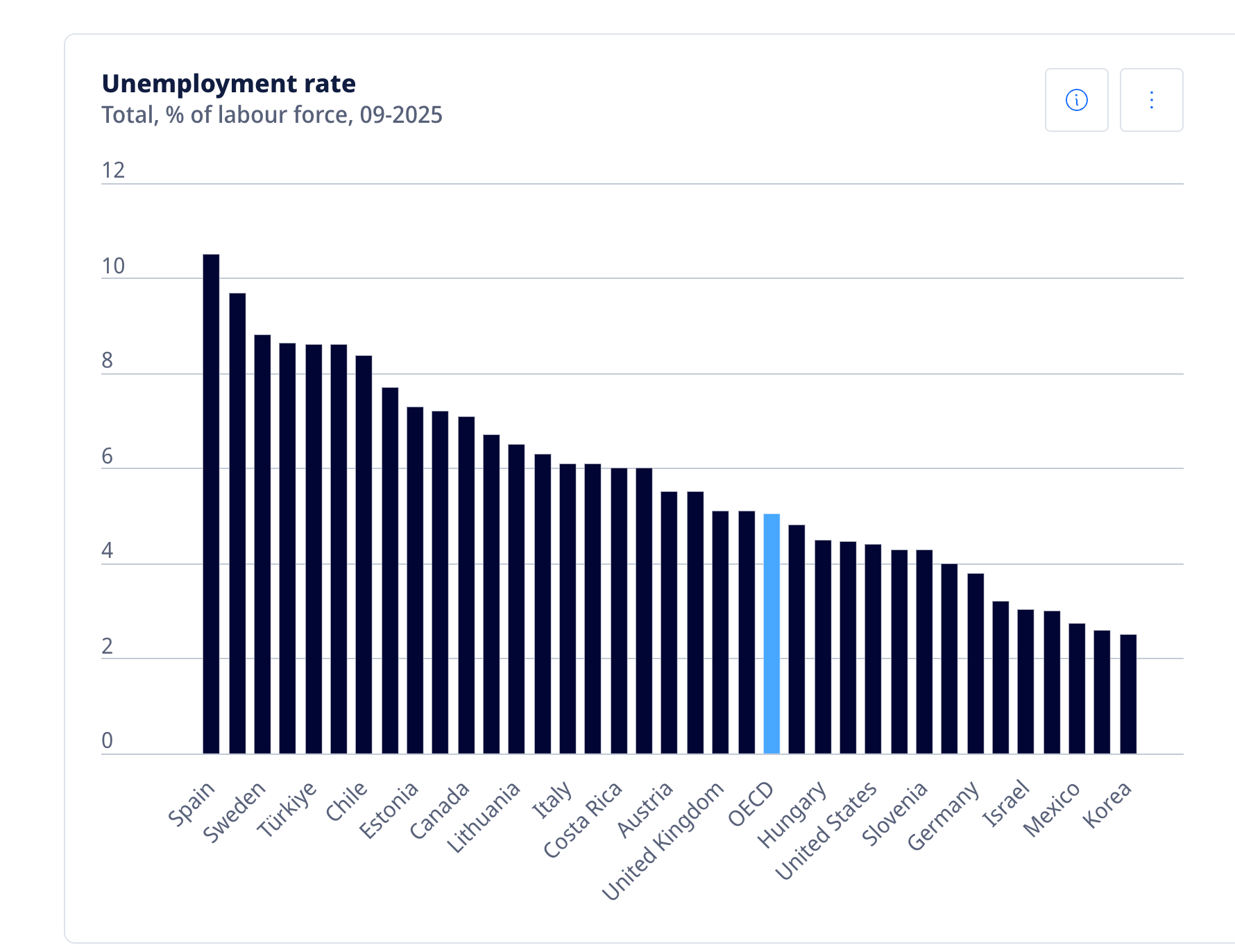
If you feel like you are shouting your experience into a void, you are not imagining it. On paper, the job market does not look disastrous. Across OECD countries, unemployment has sat around 5 percent for roughly two years, which is historically low. Yet at the same time, job seekers report sending out dozens or even hundreds of applications and hearing almost nothing back.
The disconnect is not between you and your skills. It is between how hiring actually works in 2026 and the mental model most candidates still use.
That “healthy on paper” story also falls apart once you look at actual layoff logs instead of headlines. In the first two weeks of January 2026 alone, our InterviewPal layoffs tracker picked up cuts at Groups360, Multiverse, Cloudhead Games, ANGI Homeservices, Tailwind Labs, Rad Power Bikes, Kaseya, WB Games, OKX, MercadoLibre, Devoteam, eToro, Meta, Playtika, GoTo, Ericsson, Ubisoft and a string of smaller firms. It is a tiny slice of the month, but when that many well known companies are quietly trimming headcount at the same time, it is not surprising that candidates feel like the floor keeps shifting under them.
To understand why you are not getting interviews, you have to look at three things that changed quietly: application volume, filtering technology, and communication norms. None of them have much to do with your worth as a candidate.
How the math has changed
Glassdoor data that has been quoted for years is still roughly directionally true: an average corporate job posting attracts around 250 resumes, out of which maybe 4 to 6 people are invited to interview, and one person is hired. That was already a tough funnel.
Recent analyses looking at 2024 and 2025 show that the applications per job offer have moved into even more brutal territory. Some studies now estimate that a typical job seeker may need to submit 100 to 200 applications to land a single offer, with success rates per application often sitting between 0.1 and 2 percent. At the same time, unemployment in many advanced economies has stayed low. The OECD unemployment rate has hovered at about 4.9 percent since early 2022 and is projected around 5.1 percent for 2024 and 2025. So this is not a classic recession story where there are simply no jobs.
What actually happened is that the number of applications per open role spiked faster than the number of roles.
A big driver of that spike is automation on the candidate side. LinkedIn has reported that job applications on its platform jumped by more than 45 percent in a single year, with roughly 11,000 applications being submitted every minute, fuelled in part by generative AI tools that can adapt resumes and cover letters to each posting in seconds. In our own 2025 hiring timelines study at InterviewPal, candidates who eventually received offers submitted an average of 43 applications before landing one role, based on 2,247 real job search timelines, which shows how “spray and pray” has quietly become the norm rather than the outlier.
The result is simple and ugly: for each job you see, you are not competing with 20 or 50 people. You may be competing with hundreds. For attractive white collar roles, sometimes more. On top of that, a chunk of postings are “ghost jobs” that were never meant to be filled, which is why we wrote a separate guide on how to spot a ghost job before you apply.
If you are not getting interviews, that does not mean you rank last out of everyone who applied. It often means you never cracked the very small slice of applications that anyone had time to look at.
Filters decide first: ATS systems are the real front door
The second reason you are not hearing back has nothing to do with recruiters being lazy or cruel. It has to do with how many companies now rely on applicant tracking systems to sort and rank candidates before a human sees them.
By 2024, over 98 percent of Fortune 500 companies were using an ATS. Recent compilations of ATS statistics suggest that around 75 percent of large companies and about 20 to 35 percent of small and mid-sized businesses use some form of ATS as well, and roughly three quarters of recruiters say they rely on tech driven tools to review applicants.
This matters because it changes what “rejected” actually means.
Your resume is not simply dropping into a recruiter’s inbox where they leisurely read everything. It is being parsed, scored against the job description, and placed into a ranked list. Many recruiters will never scroll past the first page of that list, especially for high volume roles.
If your experience is described in language that does not closely resemble the requirements in the posting, or if your title and skills look slightly “off label” compared to what the system expects, you may be perfectly capable and still rank too low to be worth anyone’s time.
This is why people are shocked when a warm referral suddenly changes everything. The referral did not make them more qualified. It simply bypassed the filter.
From your side, this can feel like a total breakdown. You spent time tailoring your resume, you know you can do the job, and you are still hearing nothing. From the system’s side, you are one of dozens of plausible profiles that never reached the threshold where a recruiter felt they had capacity to investigate further.
It is not a fair process. It is a triage process.

Ghosting is not an exception anymore
The third piece of the puzzle is the part that feels the most personal: silence.
In theory, more automation should have made it easier to communicate with candidates. In practice, both sides have started ghosting each other at scale.
Survey data collected over the last few years has painted a pretty stark picture. An Indeed survey found that about 75 percent of job seekers reported being ghosted after an interview. Another recent summary of ghosting trends noted that 61 percent of job seekers had been ghosted after a job interview, and even 40 percent said they were ghosted after second or third round interviews. On the employer side, a growing share of recruiters report being ghosted by candidates as well. That does not make it feel any better, but it shows that the breakdown is systemic.
For you as a candidate in 2026, this means three things:
First, silence is the default. You can follow up politely once, maybe twice, but you should not read a lack of reply as a secret message about your worth.
Second, the absence of rejection email does not mean you were close. In many cases it simply means nobody had time to send a rejection.
Third, emotional whiplash is normal. It is not unusual to have one company drag you through three rounds then disappear, while another moves you from first contact to offer in a week.
None of this is a reflection of you as a person. It is a reflection of how overloaded and inconsistent hiring teams have become.
Why this hits “good” candidates hardest
There is a cruel irony in this environment.
The candidates who are most impacted by these shifts are often the ones who took their careers seriously. They built broad skills. They pivoted when their industry changed. They took short contracts or consulting work instead of having obvious gaps.
On an ATS dashboard or in a quick skim, those same choices can look messy or risky.
Recruiters and hiring managers are dealing with application floods and pressure to avoid “bad hires.” That combination quietly pushes them toward the safest looking profiles: linear careers, familiar companies, near perfect title matches.
When you combine that with the volume stats, it explains a lot of what people are experiencing:
- Hundreds of qualified people for each posting
- Filters that reward resemblance over potential
- A communication culture where nobody has time to close the loop
You can be a strong candidate and still be almost impossible to spot in that noise.
What you can actually change
You cannot change the macro situation. You can change how you move inside it.
A few things that are worth doing, based on the data above:
Focus on timing, and not just tailoring.
If you see a role you genuinely want, apply within the first 24 to 48 hours. After that, the pile may already be unmanageable, and even a strong resume can get buried.
Match vocabulary without lying.
Look at the language used in the posting and make sure your skills and accomplishments use the same terms where they are accurate. If the role says “account management” and your bullets all say “client success,” you are making the ATS work too hard to see the match.
Audit your resume for “risk signals.”
Short roles, gaps, title jumps, and career pivots are not bad. But they need context somewhere in your profile. If a busy recruiter can not quickly understand why something happened, they may skip rather than ask.
Track response patterns instead of vibes.
If you get more traction at certain company sizes, locations, or role types, lean into that data. If referrals work ten times better than cold applications, invest more energy in those. Emotionally, this feels less fair. Strategically, it is how you stop burning energy in dead zones.
Use tools as diagnostics, and not magic wands.
Resume scanners, interview prep tools, and application trackers will not fix a broken market. What they can do is show you where you are clearly undershooting: missing keywords, unclear impact, weak alignment between your current resume and a specific role.
On InterviewPal’s side, the whole point of our interview prep and resume tools is to surface those blind spots so you are not guessing in the dark each time you hit “apply.” They cannot change the fact that 200 people applied. They can change the odds that you are at least in the 10 or 20 who get a look.
If you are not getting interviews in early 2026, you are not alone and you are not imagining it.
The numbers are against you: more applications per role, nearly universal use of filtering systems, and a ghosting culture that leaves you with no feedback loop.
The goal is not to pretend the market is fine. The goal is to understand where you are losing the game so you can make precise adjustments rather than burning yourself out rewriting the same resume for the fifteenth time.
Once you see the volume and the filters clearly, “no interviews” stops feeling like a verdict on your ability and starts looking like what it is: a signal that you need a different strategy inside a crowded, automated system. For example if you are looking for internships, read this guide.
If you like, next we can do a second piece that is purely tactical: a step by step checklist that takes someone from “zero interviews” to “at least a few conversations per month” using this reality, not wishful thinking.
If you are stuck in the “no interviews” phase, start with what recruiters see first.
Try our free Resume Summary Generator to rewrite the top of your resume so it actually matches the roles you are applying to, instead of getting buried in the pile.