


The most comprehensive, continuously updated view of global layoffs
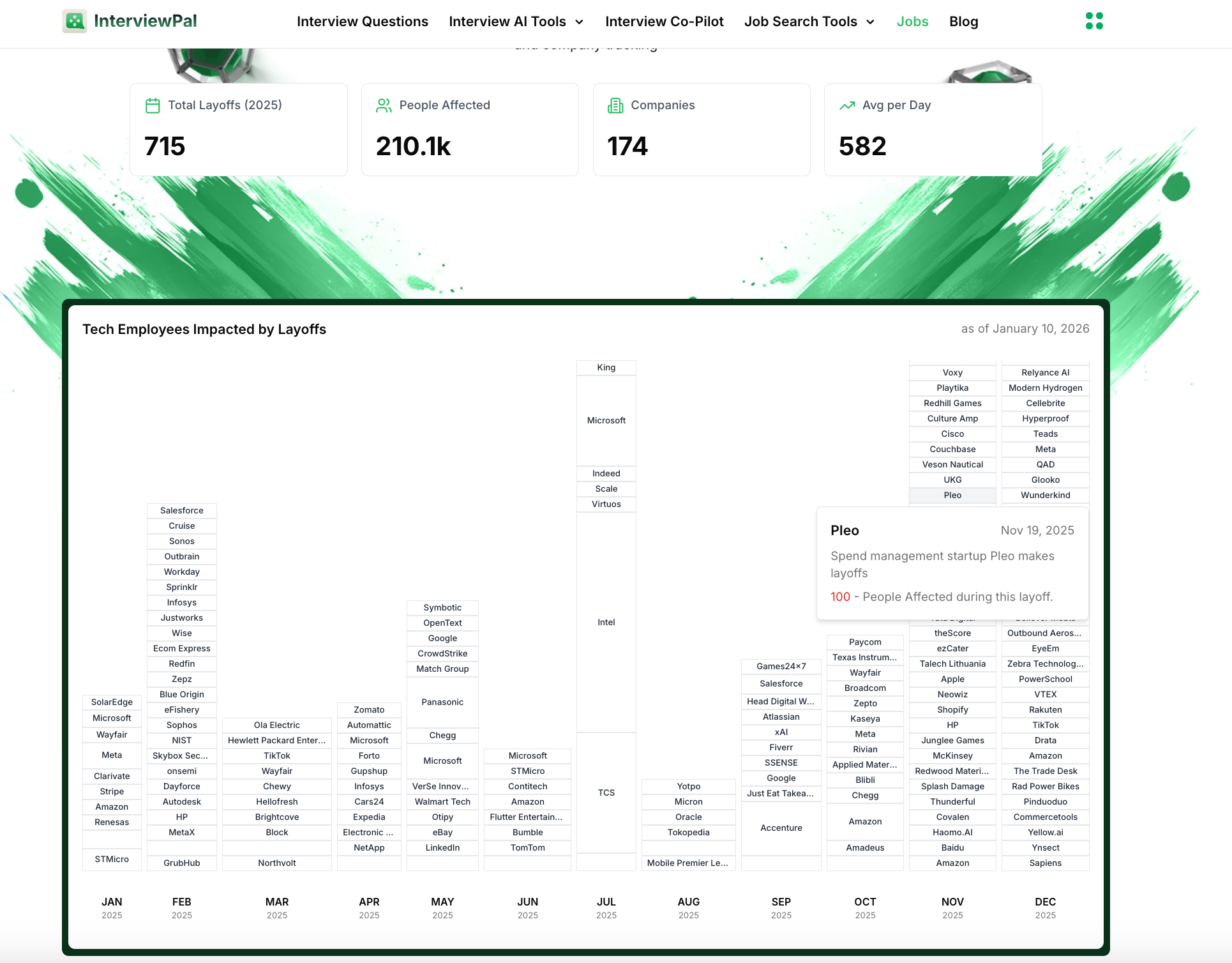
We’re launching the InterviewPal Layoffs Tracker to give job seekers, recruiters, and researchers a clearer picture of where the job market is tightening, and where it isn’t.
You can explore the tracker here:
👉 https://www.interviewpal.com/layoffs
This post walks through what the Layoffs Tracker covers, how it works, and how it can be used to make better job-search decisions in a volatile hiring environment.
What is the InterviewPal Layoffs Tracker?
The InterviewPal Layoffs Tracker is a continuously updated database that tracks layoffs across technology companies, startups, and fast-growing employers worldwide.
Instead of relying on scattered news articles, the tracker consolidates layoff information into a single, structured view that includes:
- Company name
- Layoff date
- Estimated number of employees affected
- Industry context
- Source references
The goal is simple: provide a reliable, up-to-date record of layoffs that reflects real changes in hiring conditions.
Why tracking layoffs matters for job seekers
Layoffs are one of the earliest indicators of shifts in hiring behavior.
When companies reduce headcount, it often leads to:
- Fewer open roles
- Slower interview processes
- Higher competition for remaining positions
- Changes in the types of roles being prioritized
By tracking layoffs over time, job seekers can better understand which industries are contracting, which companies are stabilizing, and where new opportunities may still exist.
How the Layoffs Tracker is different from typical layoff lists
Many layoff pages focus on headlines or isolated announcements. The InterviewPal Layoffs Tracker is built to be more practical.
Continuously updated data
New layoff events are added as they happen, keeping the dataset current and relevant.
Company-level detail
Each entry is logged at the company level, making it easier to spot patterns across industries and time periods.
Focus on high-impact employers
The tracker prioritizes companies whose hiring decisions significantly affect early- and mid-career candidates.
How to use layoff data during your job search
Layoff data is most useful when applied strategically.
Research companies before applying
Understanding a company’s recent layoff history can help you assess hiring stability and expectations.
Adjust your target roles
If layoffs are concentrated in specific functions, competition for those roles will increase. Expanding or refining your role targets can improve outcomes.
Time your applications
Hiring often pauses immediately after layoffs and resumes later. Knowing when layoffs occurred can help you time outreach and applications more effectively.
Prepare for stricter interviews
Post-layoff hiring tends to be more selective. Strong interview preparation becomes even more important in these periods.
Coverage and scope
Our Layoffs Tracker focuses on:
- Technology companies
- Startups and scaleups
- Employers with active or recent hiring activity
The tracker covers both US and international companies and expands as new data becomes available. Accuracy and clarity are prioritized over speculation.
What’s next for the Layoffs Tracker
This launch marks the first step.
Future updates will include:
- Expanded historical coverage
- More detailed industry breakdowns
- Enhanced filtering and sorting options
These improvements are designed to make the tracker even more useful for ongoing job-market research.
The full tracker is available here:
👉 https://www.interviewpal.com/layoffs
One small update that matters after layoffs
When layoffs increase, recruiters change how they search.
Titles get tighter. Keywords matter more. And LinkedIn headlines become one of the fastest filters used in sourcing. If you’re actively job searching in a market shaped by layoffs, it’s worth revisiting your headline to make sure it reflects:
- The role you’re actually targeting now
- The skills you want to be found for
- The level you’re realistically competing at
Our LinkedIn Headline Generator helps you rewrite your headline based on your role, experience, and current job-market signals, without sounding generic or over-optimized.
You can try it here:
👉 https://www.interviewpal.com/free-tools/linkedin-headline-generator